
The Allagash Abduction
Maine’s Most Controversial UFO Encounter

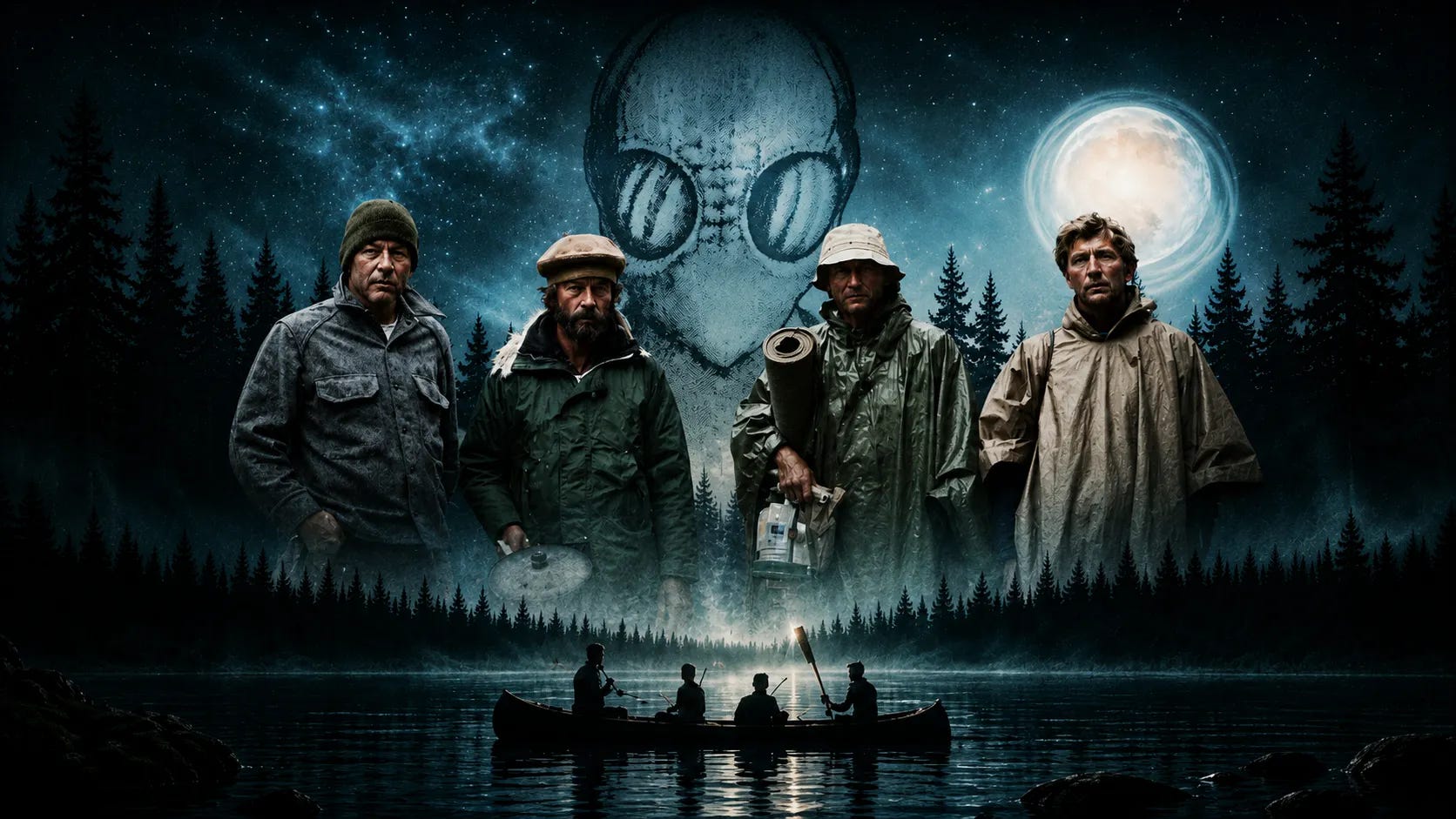
Few UFO cases have generated as much fascination, debate, and enduring controversy as the Allagash Abduction. Taking place in the remote wilderness of northern Maine during the summer of 1976, the case involves four young friends who claimed they witnessed a mysterious aerial object before experiencing missing time and, years later, recalling under hypnosis what they believed was an extraterrestrial abduction. For decades, the account stood as one of the strongest multiple-witness abduction cases in UFO history. Yet questions surrounding memory, hypnosis, and a later recantation by one of the witnesses have kept the mystery alive. Nearly fifty years later, the Allagash case remains a compelling intersection of unexplained phenomena, human psychology, and the search for answers beyond our understanding.
The story began on August 20, 1976, when identical twins Jim and Jack Weiner, along with their friends Charlie Foltz and Chuck Rack, embarked on a two-week canoe trip through the Allagash Wilderness Waterway. The region is among the most isolated areas in the northeastern United States, a vast expanse of forests, lakes, and rivers where darkness falls completely and modern civilization feels worlds away. The four young art students were seeking adventure, relaxation, and inspiration amid the natural beauty of Maine’s wilderness. What they encountered instead would become one of the most discussed UFO cases in American history.

During the early days of the trip, the group reportedly observed an unusual bright light moving silently over the distant treetops while assisting another camping party in searching for two missing hikers. The object appeared brighter than any star or planet and moved against the wind before suddenly disappearing. Although the sighting struck them as unusual, the men continued their journey and largely dismissed the experience as an unexplained curiosity.
Two nights later, while fishing after dark on Eagle Lake, the men encountered what they believed was the same object. Rising slowly above the treeline, the glowing sphere hovered silently over the forest before moving toward their canoe. Witnesses later described the object as enormous, perhaps as large as a tractor trailer, emitting an intense yellow-white light unlike anything they had ever seen. The sphere produced no sound whatsoever. Curious, Charlie Foltz flashed an SOS signal using a flashlight. Almost immediately, the object stopped moving and projected a beam of light toward the canoe. Fear quickly replaced curiosity as the four men paddled frantically for shore while the object closed the distance. The next thing they consciously remembered was arriving back at camp.
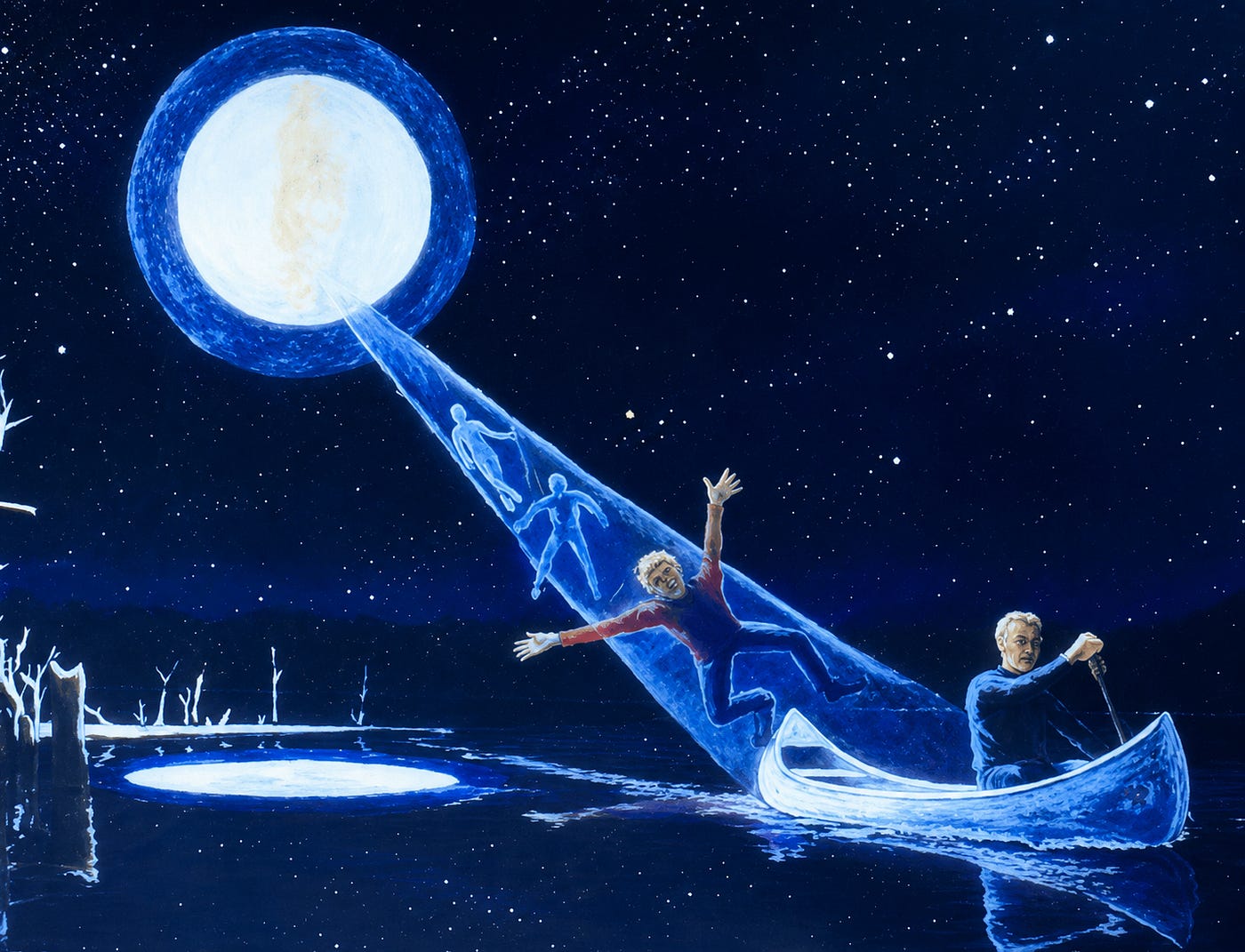
As they gathered themselves on the shoreline, the object remained visible over the lake before eventually ascending into the night sky and disappearing. It was only afterward that the group realized something was wrong. They had built a large bonfire before setting out onto the lake, intending to use it as a beacon to guide them back to camp. Yet upon returning, the fire had burned almost completely down to embers. Based on the condition of the fire, far more time had passed than any of them remembered. The men felt exhausted and confused but discussed little of the incident, eventually returning home and attempting to move on with their lives.
For years, the experience remained little more than a strange memory. Then, more than a decade later, both Jim and Jack Weiner began experiencing vivid recurring nightmares. The dreams featured bright rooms, strange beings, feelings of paralysis, and frightening medical procedures. Neither brother initially knew the other was experiencing similar dreams until they eventually compared notes and discovered remarkable similarities. This realization led Jim Weiner to contact UFO researcher Raymond Fowler, who became intrigued by the case and encouraged the witnesses to undergo hypnotic regression.
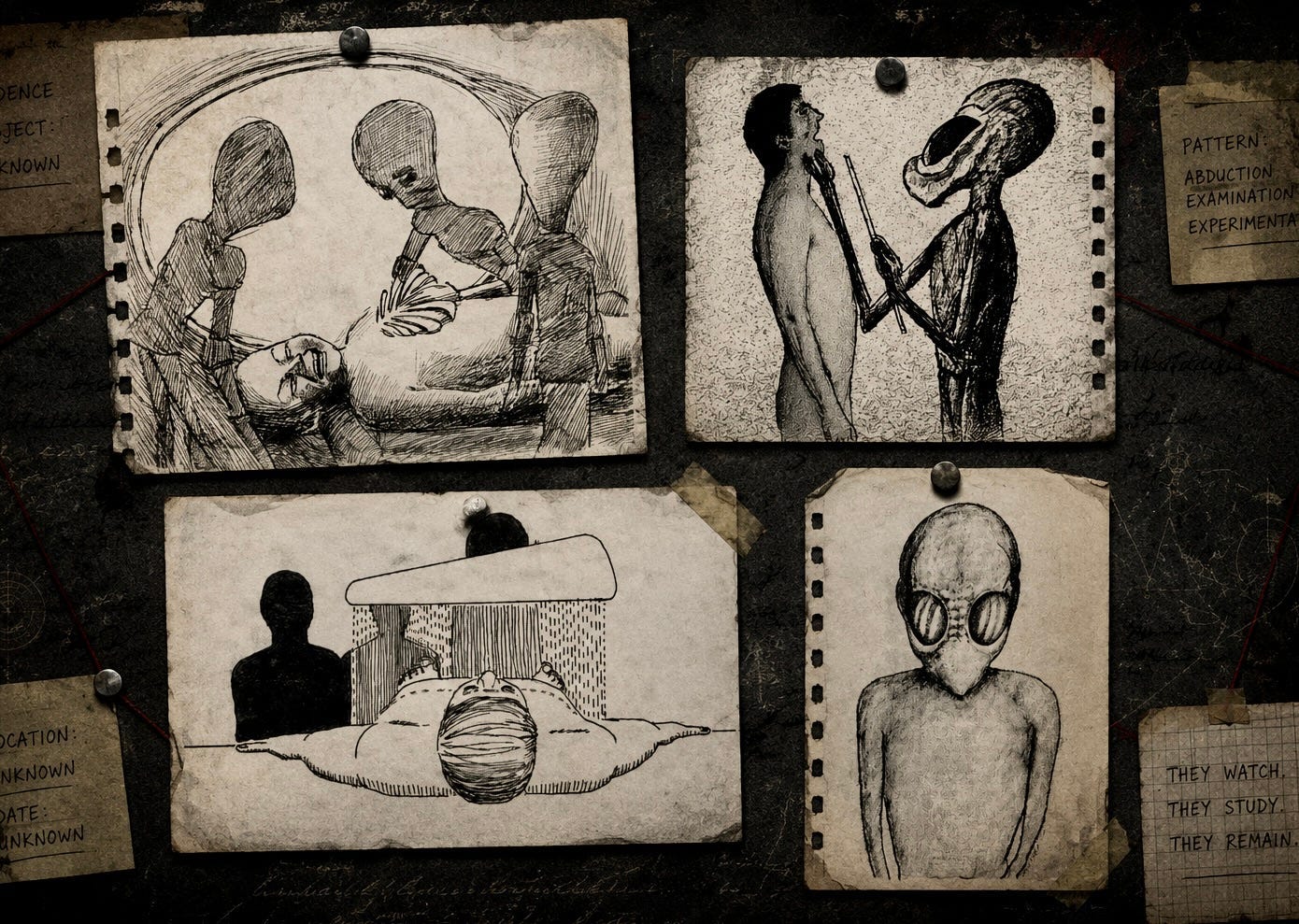
The hypnosis sessions, conducted individually in 1988, revealed what became the most controversial aspect of the Allagash story. Under hypnosis, all four men independently recalled being taken aboard a craft after the beam of light engulfed their canoe. They described finding themselves in a brightly lit environment where they were examined by non-human entities. According to their accounts, the beings were thin, gray-skinned figures with large eyes, long limbs, and four-fingered hands. The men recalled being unable to move freely while undergoing various physical examinations, including the collection of biological samples. Although separated during the hypnosis process and instructed not to discuss their sessions with one another, their recollections appeared strikingly similar.
The consistency of these accounts attracted widespread attention within the UFO community. Psychiatric evaluations reportedly found the men mentally healthy, while polygraph examinations administered by a former FBI examiner indicated that each man believed he was telling the truth. Raymond Fowler eventually documented the case in his book The Allagash Abductions: Undeniable Evidence of Alien Intervention, helping transform the story into one of the most famous alleged alien abductions in history. The men appeared at conferences, participated in television interviews, and became known collectively as the “Allagash Four.” Their story was later featured on the popular television series Unsolved Mysteries, introducing the case to a mainstream audience.
Despite its popularity, the case has always faced significant criticism. Skeptics argue that hypnotic regression is not a reliable method for recovering memories and may instead create false memories through suggestion or confabulation. Others note that by the late 1980s, alien abduction narratives involving gray beings and medical examinations had become well established in popular culture. Critics contend that these cultural influences may have shaped the memories recovered during hypnosis. While the witnesses consistently maintained their sincerity, many researchers questioned whether their recollections represented actual events or psychologically constructed narratives.
The controversy deepened dramatically in 2016 when Chuck Rack publicly recanted the abduction portion of the story. While continuing to maintain that the group had witnessed unusual lights over Eagle Lake, Rack claimed the alien abduction narrative was fabricated and suggested the story had been exaggerated in hopes of achieving financial success. He also alleged that the group had been using hashish during the trip, a claim that contradicted decades of statements from the other witnesses.

The remaining three members of the group strongly rejected Rack’s assertions, accusing him of dishonesty and attributing his reversal to personal grievances and a long-standing falling out among the friends. UFO researcher Raymond Fowler likewise defended the original account and remained convinced of its authenticity.
Today, the Allagash Abduction remains a deeply divided case. To believers, it represents one of the strongest examples of a multiple-witness encounter involving missing time, independent testimony, and lasting psychological effects. To skeptics, it serves as a cautionary tale about the dangers of hypnosis and the complexities of memory formation. Regardless of one’s interpretation, the case raises profound questions about how human beings perceive extraordinary events and how those events are remembered over time.
Nearly fifty years after four young artists paddled into the darkness of Eagle Lake, the mystery endures. Whether viewed as evidence of extraterrestrial intervention, a fascinating psychological phenomenon, or something in between, the Allagash Abduction continues to occupy a unique place in UFO history. Like the wilderness where it began, the story remains shrouded in uncertainty, inviting each new generation to examine the evidence and decide for themselves what truly happened on that summer night in Maine.
Ryan Sprague is an award-winning playwright, screenwriter, and best-selling author. He is primarily known for his work in the UFO research community, hosting the acclaimed podcast, Somewhere in the Skies, and is a regular on the History Channel on Ancient Aliens and The UnXplained with William Shatner. Learn more at: www.theryansprague.com